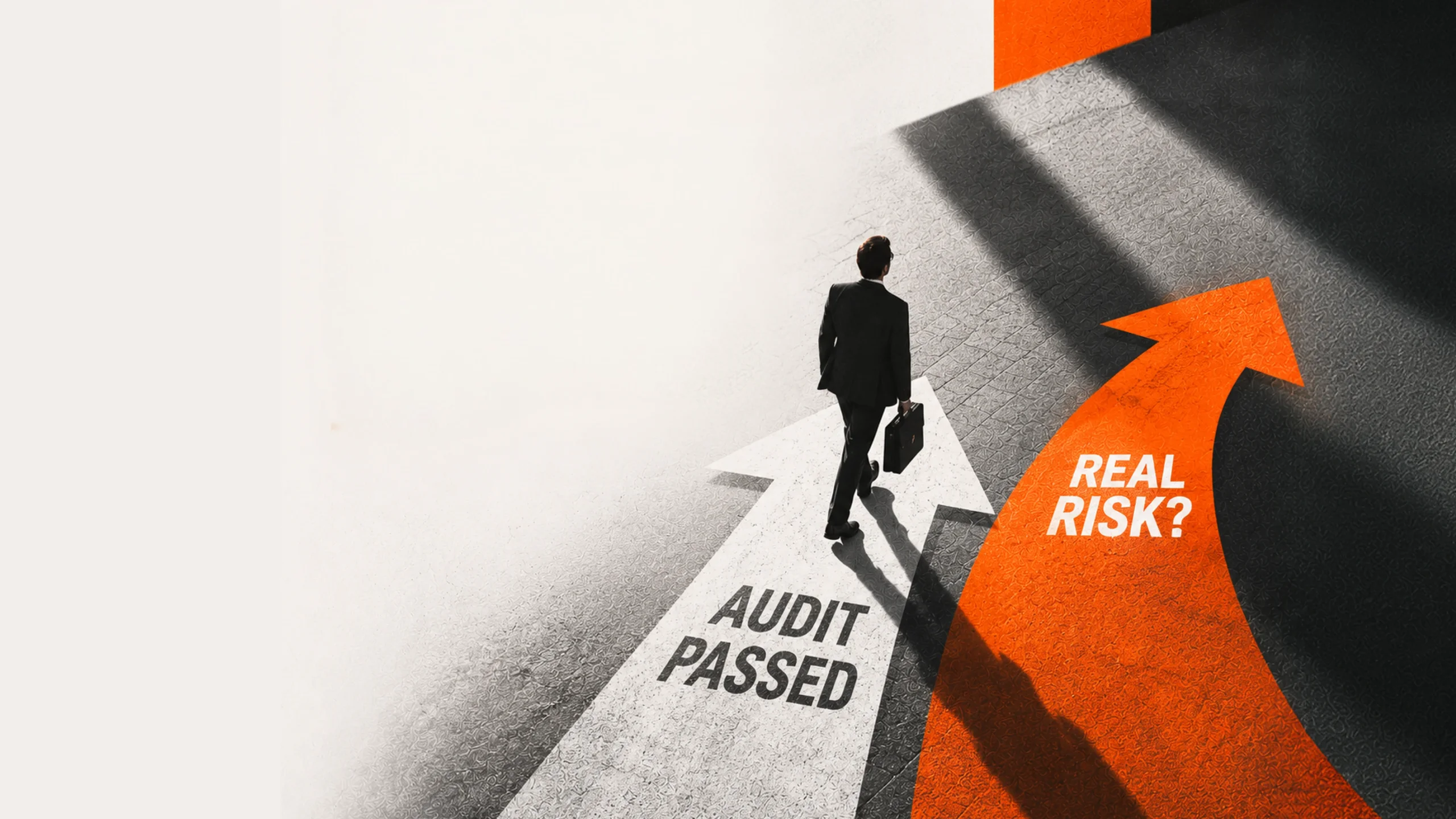
Most compliance teams can show a policy, a training log and a clean audit. Regulators ask a harder question: do the controls find real risk? An AML program review that only checks paperwork cannot answer it.
Two cases from October 2026 show the difference. In one, a large bank was penalized after regulators found that its monitoring missed and delayed reporting of suspicious activity. In the other, a crypto kiosk operator settled with state regulators and agreed to an independent review of its program. This article explains what a useful AML program review looks like.
What the rules require
Under US rules for banks, an anti-money laundering program must include independent testing for compliance. The rule says the testing can be done by bank personnel or by an outside party, but it must be independent of the people who run the program (31 CFR 1020.210).
Independence matters because a team that built a control is poorly placed to find its flaws. Independent AML testing brings a fresh view and a clear record, and it makes AML compliance testing credible to regulators.
Why a clean audit can still hide a weak program
A traditional audit often checks whether a process exists and whether staff followed it. That is useful. However, it can miss problems such as:
- Rules that do not match the risk. A monitoring rule can be applied faithfully and still miss the activity that matters.
- Alerts that sit unread. A backlog is a finding, even if every alert is eventually closed.
- Fixes that never finish. The OCC said that many steps required by its December 2024 order against Bank of America were not completed, and that the bank knew for years that potentially suspicious activity was not escalated.
- Policies that staff do not follow. What happens on the desk may differ from what is written in the manual.
What a strong AML program review covers
1. Risk assessment
Does the business-wide risk assessment reflect today’s customers, products, countries and payment channels? Is it updated when the business changes?
2. Customer due diligence
Are beneficial owners actually identified, or does the file stop at a registry entry? Are high-risk customers reviewed on time? Our due diligence team often finds the gap here first.
3. Transaction monitoring
Are thresholds tested against real cases? Where do investigations start: inside the system or from outside tips? How long does it take to file a report?
4. Investigations and reporting
Are alerts investigated to a consistent standard? Do narratives explain who, what, where, when and why? Are reports filed on time?
5. Governance and follow-through
Do findings have owners and deadlines? Does the board see the results? Are past fixes proven to work?
What an independent review looks like in practice
A useful review is built around outcomes. A reviewer typically:
- Samples closed alerts and re-investigates them from scratch.
- Re-runs confirmed past cases to see whether the system would have caught them.
- Compares thresholds to the firm’s real risk profile.
- Interviews analysts about how decisions are made.
- Delivers a ranked list of findings with a plan, not only a score.
Where gaps are found, an AML lookback review can check past activity for missed reports.
The cost of waiting
In the Coinme settlement, 34 state regulators required the company to hire an independent consultant to review its BSA/AML program, and to end kiosk operations in affected states by 1 January 2027 or pay an additional $4 million. When a regulator orders an independent review, the firm has lost control of the timing.
A voluntary review, done early, lets you find problems on your own terms.
How CAT Investigators can help
CAT Investigators provides AML compliance services for banks, fintechs, crypto businesses and corporates. Our fraud and money laundering specialists carry out independent testing, re-investigate samples of alerts and support lookback work. We report what we find clearly and plainly.
To discuss an independent review, contact CAT Investigators.
Sources
- Electronic Code of Federal Regulations, 31 CFR 1020.210, anti-money laundering program requirements for banks
- OCC, News Release 2026-89, 13 October 2026
- FinCEN, “FinCEN Assesses $1.2 Billion Penalty Against Bank of America,” 13 October 2026
- Illinois Department of Financial and Professional Regulation, news release on the multistate Coinme settlement, 8 October 2026
This article is for general information and does not constitute legal advice.