
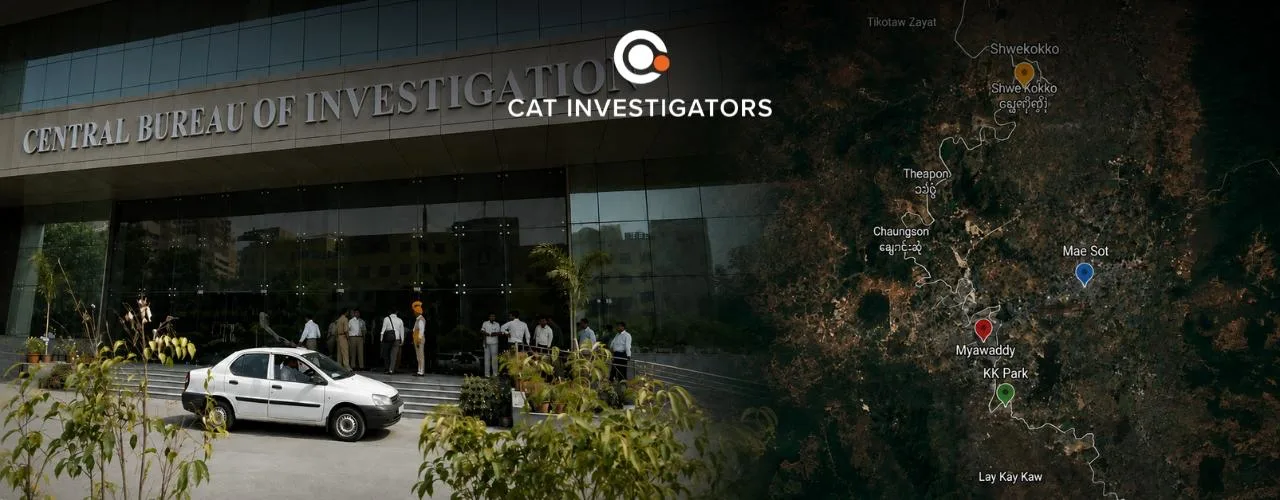
India’s Central Bureau of Investigation (CBI) has arrested a Hisar-based suspect in a cyber slavery trafficking probe. The man is accused of recruiting Indian nationals for Southeast Asian scam compounds. Investigators are now examining suspected cryptocurrency commission payments. They are also reviewing digital evidence that links him to recruiters in Myanmar and Cambodia.

Satellite imagery of Myanmar reveals the rapid emergence and expansion of suspected scam compounds across the region. Source: WIRED
The Cyber Slavery Recruitment Network
According to the CBI, the alleged network advertised lucrative overseas jobs to Indian citizens. It then moved victims to scam compounds, primarily in Myanmar and Cambodia. Once there, victims allegedly faced conditions the agency describes as “cyber slavery”.
The arrested individual allegedly sent at least four people from the Hisar area to such compounds during 2025. According to victim statements, some had to pay substantial sums to return to India. Meanwhile, operators allegedly told others to recruit a replacement before they could leave.
Digital Recruitment Methods
The investigation points to a familiar online recruitment funnel. Recruiters allegedly used Instagram advertisements to attract candidates, while Telegram served as a communications channel.
This combination can obscure recruiter identities and accelerate cross-border contact. It can also move prospective workers outside formal employment-verification channels.
The CBI said it recovered incriminating material from the suspect’s seized mobile phone. In addition, investigators are reviewing multiple cryptocurrency transactions. These may represent commissions that operators of the scam compounds paid to the suspect.
The Wider Cyber Slavery Investigation
The CBI registered the case in December 2025 against a wider network of agents accused of trafficking Indian nationals into scam compounds.
In May and June 2026, the agency conducted coordinated searches at eight locations across four Indian states. During that operation, it arrested three other suspects connected to the same investigation.
The latest arrest therefore adds a Hisar-based recruitment link to the cyber slavery case. The investigation now spans local agents, online platforms, cross-border facilitators and potentially crypto-based remuneration. However, the CBI has not disclosed the value, assets, blockchain networks or counterparties involved in the cryptocurrency transactions under review.
Warning for Jobseekers
The agency urged people to treat overseas job offers with extreme caution. This applies especially to offers circulated through social media, messaging apps and informal contacts.
Applicants should independently verify employers, contracts, visa arrangements and recruitment agents through official channels. They should do this before traveling or making payments.
For investigators and compliance teams, the case illustrates a high-risk pattern: deceptive employment advertising, Telegram-based coordination, victim movement into Myanmar or Cambodia, and suspected crypto payments to intermediary recruiters.
What the Cyber Slavery Case Means for Investigators
Cases like this one show how trafficking, fraud and money laundering now overlap. A single recruitment chain can touch social media platforms, messaging apps, travel arrangements and crypto wallets. As a result, each link in the chain can leave a different kind of evidence.
For investigators, the first step is usually mapping the recruitment funnel. This means preserving advertisements, account handles, chat logs and payment records before they disappear. Then, OSINT and evidence analysis can help connect recruiter personas across platforms.
Crypto payments add a second layer. Even without public wallet details, commission payments to recruiters may pass through exchanges or brokers at some point. Where they do, blockchain analysis can help follow the crypto money toward identifiable accounts.
For employers and compliance teams, the lesson is practical. Before working with any overseas job intermediary, run background checks and confirm the agent through official licensing records. Similarly, financial institutions should watch for crypto transfers that appear linked to recruitment activity.
To learn more about how these compounds operate, read our analysis of the global scam compound industry. If you need help assessing a suspected cyber slavery or recruitment network, contact CAT Investigators for a confidential discussion.