
When Seeing Isn’t Believing Anymore
There was a time when visual and audio evidence carried inherent credibility.
A recording spoke for itself. A video was assumed to reflect reality. That assumption no longer holds.
Deepfake technology is not just introducing fabricated media into investigations. It is challenging the foundation of evidentiary trust. The real issue is not simply the presence of synthetic content. It is the erosion of confidence in authentic evidence.
When doubt becomes plausible, verification becomes critical.
What’s Changed: From Novelty to Operational Threat
Identifying manipulated media is only one part of the equation.
Verification Complexity
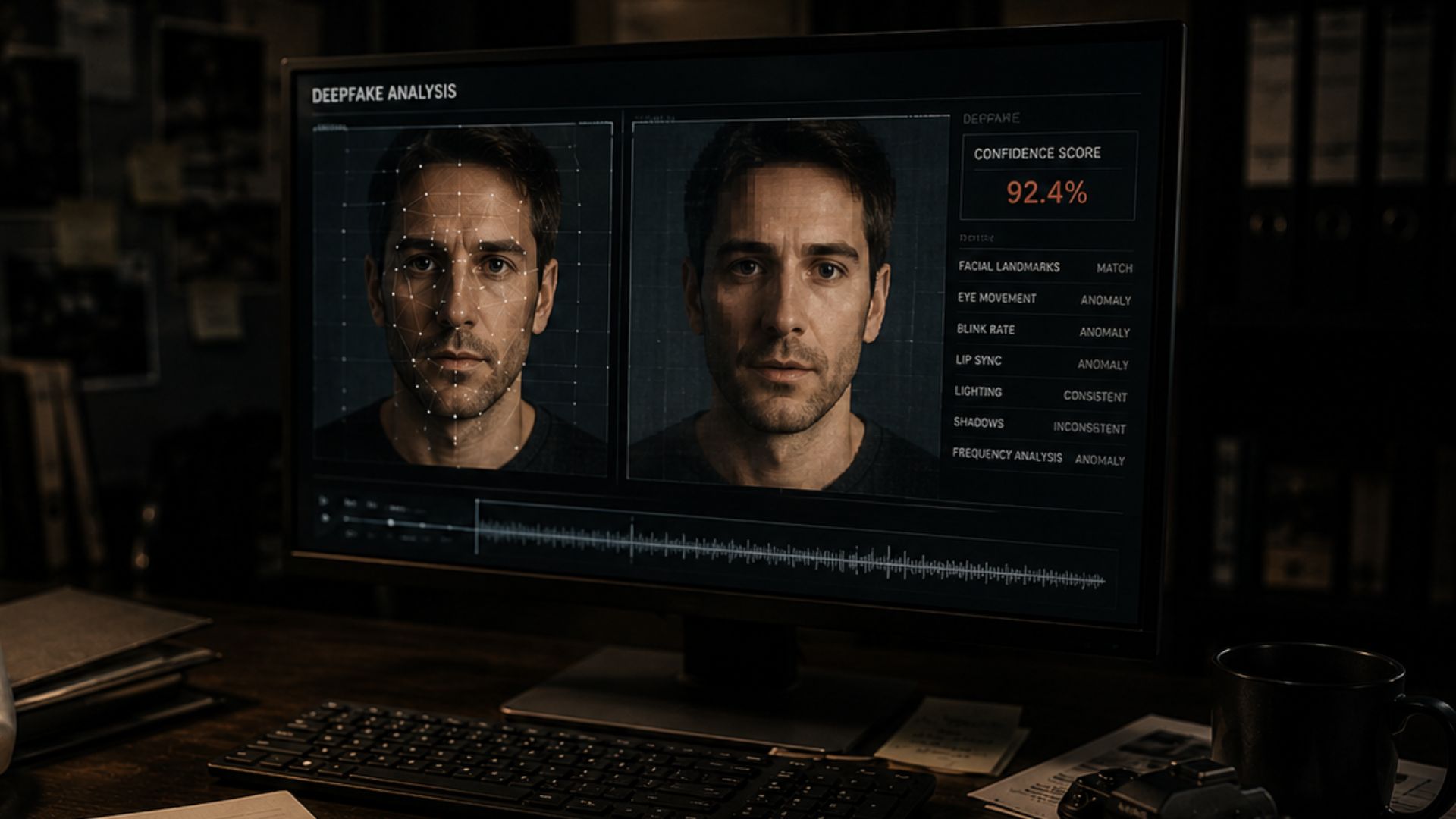
Authenticating digital media now requires specialised forensic analysis. Subtle artefacts, metadata inconsistencies, compression anomalies, and behavioural irregularities must be assessed systematically. Traditional forensic assumptions are evolving. A file’s existence is no longer proof of its authenticity.
Speed vs Accuracy Pressure
Investigations often unfold under urgency, particularly when reputational damage or financial exposure is involved. However, verification takes time. Premature conclusions, whether dismissing genuine evidence or accepting manipulated content, can create lasting consequences. Balancing speed with evidentiary accuracy is increasingly delicate.
Legal and Evidentiary Questions
Courts and regulators are adapting, but unevenly. Admissibility standards for digital media are still developing. Legal teams must now anticipate challenges to authenticity as a routine part of case preparation. The burden is shifting toward demonstrating not only relevance, but reliability.
Reputation Risk Amplification
Even when debunked, deepfakes can cause damage. A fabricated video circulated briefly can erode stakeholder trust, impact share value, or create regulatory attention. In some cases, the correction never travels as far as the original content. The investigative response must therefore address both factual verification and reputational containment.
How Investigators Are Responding
Forward-thinking investigative teams are adapting methodically.
Responses include:
- Deployment of advanced digital forensic tools
- Collaboration with AI specialists and accredited forensic laboratories
- Strengthened chain-of-custody protocols for digital media
- Layered verification processes combining technical and contextual analysis
Detection alone is insufficient. Structured validation is becoming standard practice.
Where Organisations Remain Vulnerable
Despite growing awareness, vulnerabilities persist.
Common exposure points include: lack of internal training on synthetic media risks, overreliance on visual or audio confirmation, crisis response frameworks that do not account for manipulated media and delayed escalation to forensic specialists. In many organisations, preparedness has not kept pace with technological capability.
Staying Ahead | Practical Strategic Shifts
To mitigate synthetic media risk, organisations are implementing structural adjustments:
- Continuous monitoring of digital and social channels
- Training investigative and executive teams on deepfake indicators
- Establishing rapid verification protocols
- Integrating legal, forensic, and communications expertise early
Reactive approaches are increasingly insufficient. Preparedness must be embedded.
Investigations in the Age of Synthetic Reality
Technology is evolving faster than policy. Investigative success in the coming years will depend less on access to tools and more on adaptability, the ability to question assumptions, validate evidence rigorously, and respond proportionately.
Trust can no longer be inferred from appearance.
It must be demonstrated through verification.
In an era of synthetic reality, expertise becomes the anchor.
Navigating AI-Driven Investigative Risk
At CAT Investigators, we support organisations confronting emerging digital evidence challenges, right from suspected manipulated media to broader AI-driven reputational threats.
If your organisation is reassessing its preparedness for synthetic media risk, we welcome a confidential discussion on strengthening verification frameworks and investigative resilience.
FAQs
What is a deepfake?
A deepfake is synthetic media like video, audio, or images generated or manipulated using artificial intelligence to realistically imitate a person’s appearance, voice, or actions. Unlike traditional editing, deepfakes can fabricate entirely new content that appears authentic, making detection more complex.
How are deepfakes being used in fraud or corporate disputes?
Deepfakes are increasingly used in:
- Executive impersonation scams (including voice cloning)
- Payment diversion fraud
- Extortion attempts
- Reputational attacks
- Manipulated evidence in disputes
In some cases, fabricated media is introduced to create confusion or leverage during high-stakes negotiations or litigation.
Are deepfakes admissible in court?
Courts are increasingly aware of synthetic media risks. Admissibility depends on jurisdiction, authenticity verification, and evidentiary standards. Legal teams must now be prepared to demonstrate not only relevance but also reliability and integrity of digital evidence.
Can deepfakes cause damage even if they are proven false?
Yes. Reputational harm, stakeholder uncertainty, market reaction, or regulatory attention may occur before verification is complete. In many cases, corrective clarification does not circulate as widely as the manipulated content. Speed of response is therefore critical.
How can organisations protect themselves against deepfake risks?
Proactive measures include:
- Establishing verification protocols for sensitive communications
- Training executives and investigative teams on synthetic media risks
- Implementing multi-factor verification for financial transactions
- Monitoring digital channels for impersonation attempts
Preparedness reduces both financial and reputational exposure.
Are certain industries more vulnerable to deepfake threats?
Yes. High-visibility sectors such as finance, technology, publicly traded companies, and organisations with strong public-facing leadership profiles are particularly exposed. However, any organisation handling financial transfers, confidential information, or sensitive disputes may be targeted.