

Of all investigator tools, the polygraph may be the most misunderstood. Ask most people what they know about polygraph testing and you will hear one of two things.
Either it is an infallible truth machine that nobody can beat. Or it is science that no serious court would ever admit. People hold both positions with enormous confidence. Yet both are wrong.
The reality of polygraph testing is more nuanced, more legally sophisticated, and significantly more useful than either extreme suggests. Consider legal professionals, corporate investigators, government agencies, and anyone in a high-stakes proceeding where credibility is at the center of the case. For all of them, understanding what polygraphs can and cannot do is increasingly important.
The Most Misunderstood of Investigator Tools: What the Machine Does
Start with the most fundamental misconception: what the machine does.
A polygraph does not detect lies. Instead, it measures physiology.
Specifically, it records changes in respiration, cardiovascular activity, and electrodermal response across a structured series of questions. Electrodermal response is more commonly known as sweat gland activity. The machine captures the body’s physiological responses. A trained examiner then interprets what those responses mean. That interpretation depends on the specific questions asked, the baseline established during the examination, and the totality of the session.
The distinction between measuring physiological response and detecting deception is not a technicality. On the contrary, it is the foundation for understanding what a polygraph can reliably do and where its limitations actually lie. The technology is the starting point. However, the examiner and the methodology determine whether the output is useful.
This is also why the quality of the examiner is not a minor variable. In fact, it is one of the most significant factors in whether a polygraph examination produces intelligence worth acting on.
Seven Myths About This Investigator Tool, Addressed Directly
Myth 1: Polygraphs are infallible lie detectors.
The American Polygraph Association’s 2011 meta-analysis covered 38 qualifying studies. It found that validated polygraph techniques produce an aggregated decision accuracy of 87%, with event-specific diagnostic techniques achieving 89%. Similarly, the National Academy of Sciences found accuracy indexes ranging from 0.81 to 0.91. At the same time, it noted these figures likely overstate true field accuracy.
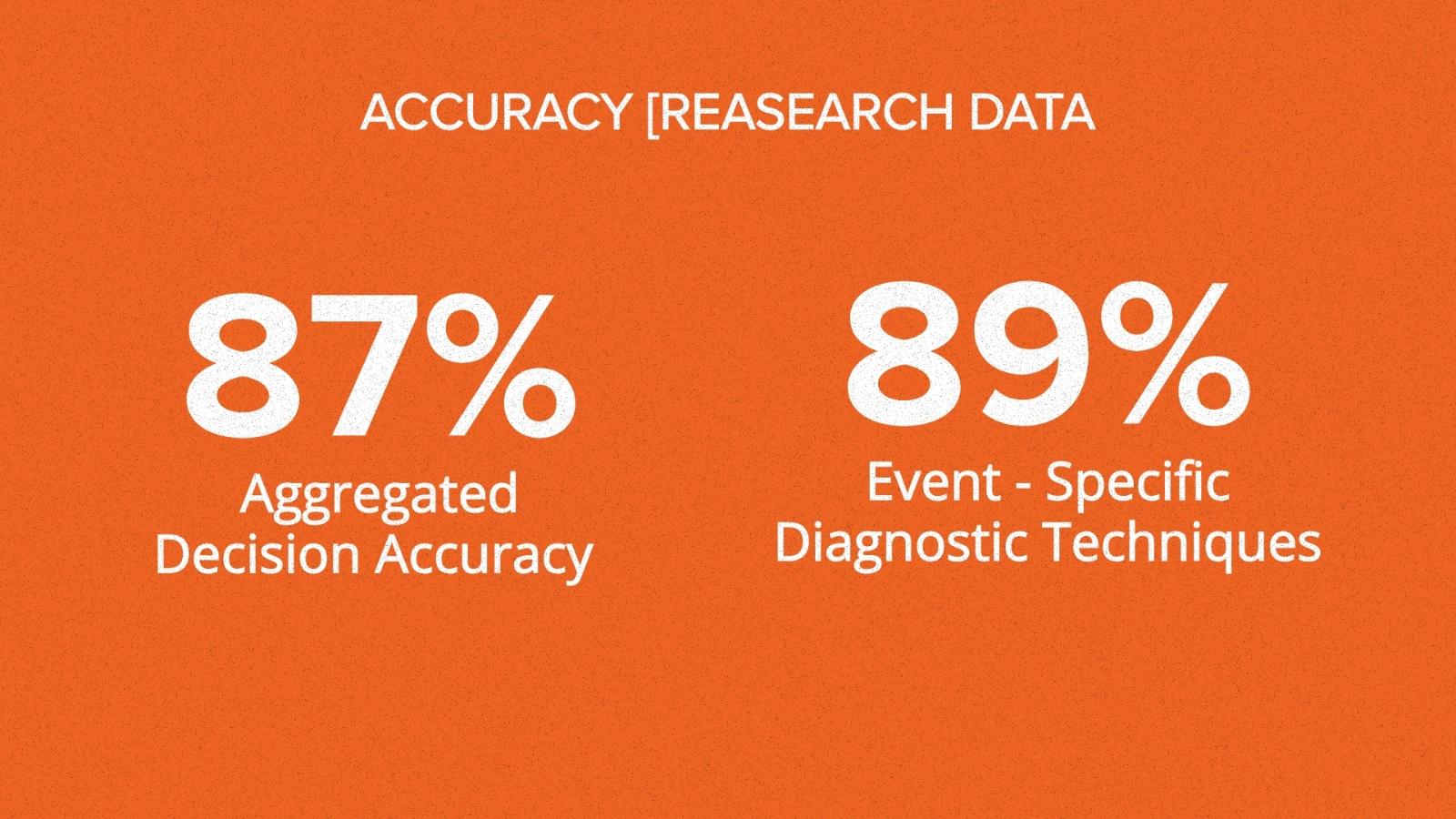
Those are meaningful accuracy rates. However, they are not perfect ones. False positives exist: truthful people who register deceptive responses. False negatives also exist: deceptive people whose physiological responses do not trigger the relevant indicators. The polygraph is one of the most powerful investigator tools available. Still, it is not an infallible one. Treating it as such leads to exactly the kind of misuse that brought it under legitimate scrutiny.
Myth 2: You can easily beat a polygraph.
This myth receives the most confident endorsement from people who have never actually been tested. Countermeasures circulate online, such as controlled breathing, biting the tongue, and mental arithmetic. Yet they are largely ineffective against a trained examiner conducting a properly designed examination.
The consequences of attempting to teach them are not theoretical. In 2013, Operation Lie Busters resulted in federal indictments specifically for teaching polygraph countermeasures. Doug Williams was sentenced to two years in federal prison and Chad Dixon received eight months. Both sentences related to their roles in coaching individuals on countermeasure techniques. Moreover, examiners train to identify countermeasure attempts. A detected attempt does not produce an inconclusive result. Instead, it produces findings that are actively damaging.
Myth 3: Polygraphs are never admissible in court.
Many conversations state this as an absolute fact and treat it as settled law. It is not settled. Rather, it is jurisdiction-specific, proceeding-specific, and in active legal evolution.
New Mexico is the only state that permits routine admission of polygraph results without a prior stipulation, under Rule 11-707. As of 2007, 19 states admitted polygraph testimony by stipulation, and this number has continued to evolve. Furthermore, the 2025 Nania v. State decision in Wyoming shows that courts are actively reconsidering blanket bans on polygraph admissibility. In federal courts, the Daubert standard applies. There, admissibility is at the discretion of the trial judge, based on whether the specific technique meets the standard of scientific reliability.
Beyond trial proceedings, parties regularly use polygraph results in plea negotiations, bond hearings, sentencing evaluations, and post-conviction supervision programs. In these contexts, the formal admissibility rules that apply at trial are not the relevant framework.
The blanket claim that polygraphs are never admissible is not just inaccurate. It also causes attorneys and investigators to dismiss a tool that could be strategically valuable in their specific proceeding. Our criminal defense investigations team regularly works with attorneys on exactly these questions.
Myth 4: Only guilty people fail polygraphs.
The test measures physiological response to stress. Anxiety, fear, a strong desire to be believed, previous trauma, and medical conditions can all produce responses that look deceptive. As a result, an examiner may score an innocent person as deceptive. Conversely, some people are skilled at emotional regulation or genuinely believe a distorted account of events. Others are practiced at the specific conditions of polygraph examination. These individuals may produce responses that score as non-deceptive when they are not telling the truth.
This is not an argument against polygraph testing. Rather, it is an argument for understanding what it produces: probabilistic intelligence, not certainty. A finding of deception warrants further investigation. It is not a verdict.
Myth 5: Polygraphs are only used in criminal cases.
Federal, state, and local government agencies may use polygraph testing for any employment purpose. This includes pre-employment screening, periodic security checks, and specific incident investigations. For example, the FBI, DEA, Secret Service, CIA, NSA, and numerous other federal agencies routinely require polygraph examinations when hiring agents, analysts, and support staff.
Beyond government, organizations use polygraph testing in internal corporate investigations involving theft, fraud, and misconduct. It also appears in HR disputes where no other means can resolve conflicting accounts, and in custody proceedings. Similarly, it supports high-value commercial negotiations where verifying specific representations is material to a transaction. The criminal context is the most publicly visible application. Even so, it is far from the only one.
Myth 6: The examiner does not matter.
It matters enormously. Question design is one of the most technically demanding aspects of a polygraph examination. A poorly designed question set can render an examination useless, regardless of how sophisticated the equipment is. Several examiner variables directly affect the reliability and usability of the output. These include training, certification, experience in the specific type of examination, and qualification to testify in court if required.
There is no such thing as a generic polygraph result. There is only a result produced by a specific examiner using a specific technique under specific conditions. Treating those variables as interchangeable is how organizations end up with findings they cannot act on.
Myth 7: A passed polygraph proves innocence.
It does not. Instead, it provides a data point. It indicates that the examinee’s physiological responses to the relevant questions did not produce deceptive indicators under the conditions of the examination. What that means depends on the technique, the examiner, the specific questions asked, and the context of the evaluation. A passed polygraph is meaningful intelligence. Nevertheless, it is not exoneration. Presenting it as such is both legally inaccurate and strategically counterproductive.
Where the Polygraph Earns Its Place Among Investigator Tools
Understanding the myths clears the ground for understanding where polygraph testing genuinely delivers value.
Pre-employment screening for sensitive roles. Nearly every law enforcement agency in the United States requires pre-employment polygraph screening. Moreover, the government exemption under EPPA is absolute. It covers federal, state, and local agencies, with unrestricted authority to use polygraph testing in both pre-employment and ongoing employment contexts. Some roles involve access to classified information, public funds, or sensitive operational environments. For those roles, polygraph screening is not a supplementary tool. It is a baseline requirement, often paired with thorough background checks.
Internal corporate investigations. An organization may face allegations of internal theft, financial misconduct, or fraud that the formal evidentiary record cannot resolve. In that case, polygraph examination of relevant individuals provides useful investigative intelligence. It can direct resources toward the right people and away from the wrong ones. It does not replace a full investigation. Instead, it focuses it, which is why our corporate investigations team treats it as one of several investigator tools.
Directing investigative resources. One of the most consistently underappreciated applications of polygraph testing is its role in showing where further investigation is warranted. A finding of deception does not end the investigation. Rather, it prioritizes it. Several individuals may provide conflicting versions of events. In that situation, knowing which account warrants deeper scrutiny, and which can be set aside, is valuable.
Legal proceedings. Some jurisdictions allow admission, whether by stipulation, under specific state rules, or through discretionary federal admission. There, polygraph results can support negotiation, challenge credibility, or provide evidence that influences outcomes at sentencing or in plea discussions. Even without formal admission, the existence of a polygraph result frequently shapes how a proceeding develops.
The Admissibility Question, Answered Properly
The legal framework governing polygraph admissibility is more nuanced than the standard dismissal suggests. In addition, it is in active evolution.
Two primary standards govern admissibility in the United States. The Frye standard requires that the technique be generally accepted within the relevant scientific community. It was the dominant framework in federal courts until 1993. That year, the Supreme Court’s Daubert decision replaced it with a more flexible standard. Daubert evaluates scientific reliability based on a broader range of factors, including peer review, error rate, and general acceptance.
Under Daubert, polygraph admissibility in federal court is at the discretion of the trial judge. The judge evaluates whether the specific technique meets the standard of scientific reliability on a case-by-case basis. No appellate court has ruled that polygraph evidence is always admissible. Likewise, no uniform rule applies across all federal circuits.
At the state level, the picture varies significantly by jurisdiction. New Mexico remains the only state permitting routine admission without stipulation. Meanwhile, a significant number of states admit results by stipulation when both parties agree in advance.
For attorneys and investigators, the strategic implication is specific. Before commissioning a polygraph examination for potential use in legal proceedings, establish three things in advance. These are the admissibility framework in the relevant jurisdiction, the technique, and the examiner’s qualification to testify. Results obtained without that groundwork are not unusable. However, they may be significantly less valuable than they could have been.
How Investigators Should Commission This Tool Properly
The quality of a polygraph examination is set before the examinee sits down. In particular, it depends on the decisions made in designing and commissioning the engagement.
Question design is the most technically demanding component. Questions must be specific, unambiguous, and structured to produce physiologically distinguishable responses between deceptive and non-deceptive answers. Poorly designed questions produce inconclusive results regardless of the examinee’s truthfulness. They also invite challenge if the results are intended for use in legal proceedings.
Examiner selection is not a commodity decision. Several factors determine whether the engagement produces results you can act on. These include the examiner’s certification and their experience with the specific type of examination required. Equally important are their qualification to testify in the relevant jurisdiction and their familiarity with the evidentiary requirements that will apply. Our polygraph investigations service is built around these standards.
The report from a properly conducted examination should document the technique, the questions asked, and the physiological data recorded. It should also cover the examiner’s analysis and conclusions, and the methodology in enough detail to withstand scrutiny. A report that simply states a conclusion without documenting its basis is not useful in a legal context. Furthermore, it is vulnerable to challenge in any formal proceeding.
Integrating polygraph findings into a broader investigative or legal strategy requires treating the results as intelligence rather than verdicts. They direct further inquiry. They support or challenge a narrative. Above all, they provide a basis for focused investigation. Used that way, by the right examiner and with the right methodology, the polygraph is among the most powerful investigator tools.
The Polygraph Among Investigator Tools: What It Is and What It Is Not
A polygraph test is not a truth machine. The courtroom dramas that treat it as one, and the dismissals that treat it as useless, both miss what it actually is.
It is a structured, physiologically grounded investigative tool. When a qualified examiner uses it correctly, it produces intelligence that changes the direction of an investigation. Moreover, it informs legal strategy in ways that other evidence types cannot. It has limitations, and understanding those limitations is what allows investigators to use the tool effectively.
The organizations and legal teams that understand this use polygraph testing as a precision instrument in the right circumstances. By contrast, those that do not either over-rely on it or dismiss it entirely. Both are mistakes that cost more than the test itself ever would. To discuss whether a polygraph fits your case, request a consultation.
FAQs
How accurate are polygraph tests?
The American Polygraph Association’s meta-analysis found that validated polygraph techniques produce an aggregated decision accuracy of 87%, with event-specific tests achieving 89%. The National Academy of Sciences found accuracy indexes of 0.81 to 0.91, while noting these likely overstate true field accuracy. The accuracy rate is meaningful and well-documented. Still, it is not perfect, so polygraph results are best understood as probabilistic intelligence rather than definitive verdicts.
Are polygraph results admissible in court?
It depends on the jurisdiction and the proceeding. New Mexico permits routine admission without stipulation. A significant number of states admit results by stipulation. Federal courts apply the Daubert standard, leaving admissibility to the trial judge. Beyond trial, parties regularly use polygraph results in plea negotiations, bond hearings, and sentencing evaluations. The blanket claim that polygraphs are never admissible is legally inaccurate.
Can you beat a polygraph test?
Countermeasure techniques are largely ineffective against a properly conducted examination by a trained examiner, who knows how to identify such attempts. The federal prosecution of people who taught countermeasures led to sentences of two years and eight months respectively. This shows how seriously the law treats attempts to defeat these examinations.
What does a polygraph test actually measure?
It measures physiological responses: changes in respiration, cardiovascular activity, and electrodermal response across a structured series of questions. It does not directly detect lies. Instead, a trained examiner interprets the body’s reactions in light of the examination design, the baseline, and the specific questions asked.
When is a polygraph test useful in an investigation?
Polygraph testing is most useful in four areas. First, pre-employment screening for sensitive government and law enforcement roles. Second, internal corporate investigations where no other means can resolve conflicting accounts. Third, directing resources toward the accounts that warrant deeper scrutiny. Finally, legal proceedings where the admissibility framework allows strategic use of the results.