
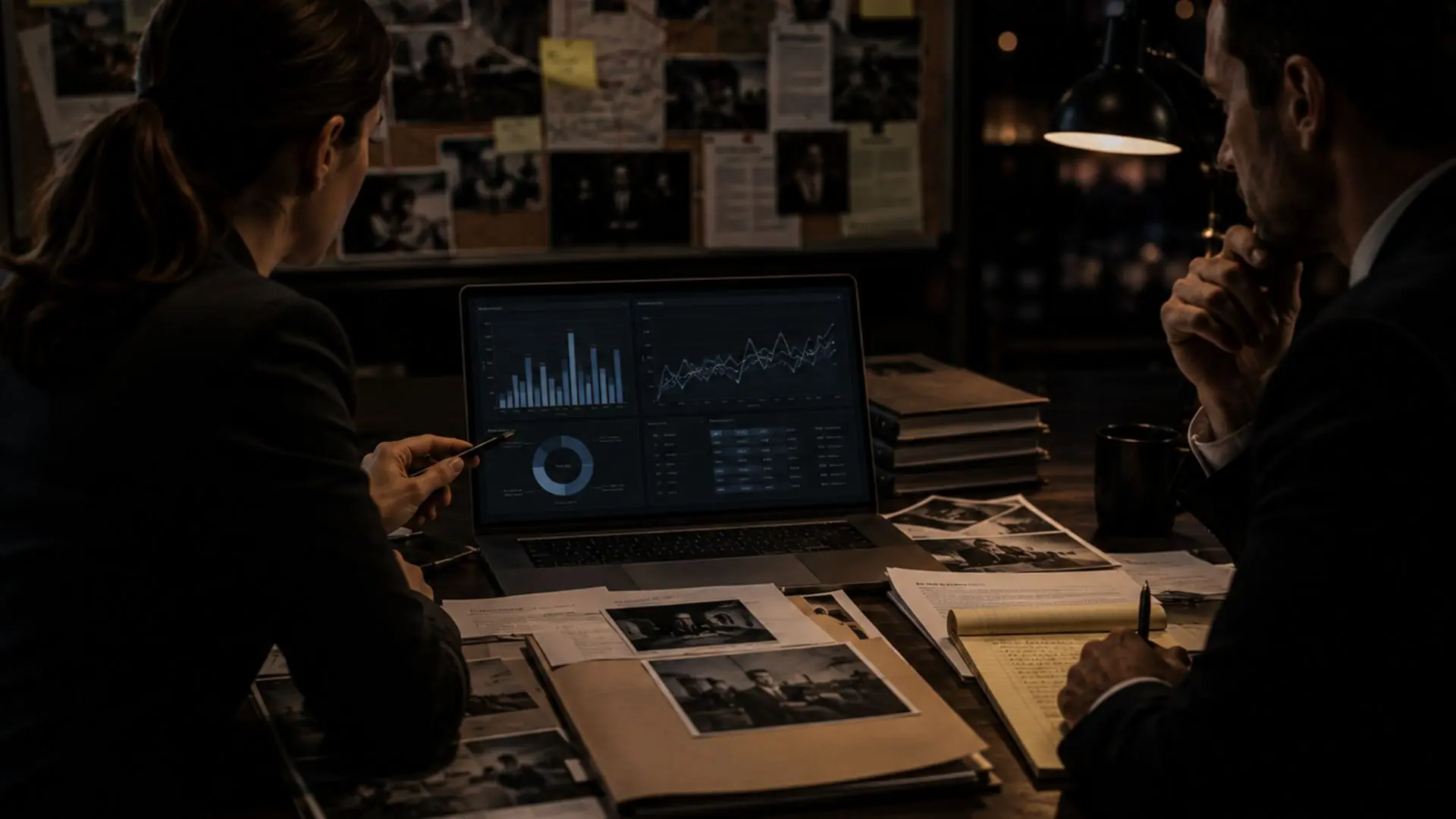
How Crime Investigators Assist Criminal Defense Attorneys
When someone is charged with a criminal offense, most people assume the process is straightforward. The police investigate, the prosecutor presents evidence, the defense argues back, and the court reaches a verdict. What’s less visible is the work that happens behind the scenes. Much of it takes place long before anyone sets foot in a courtroom, and crime investigators handle a large share of it.
Investigative work is one of the most important and most underappreciated parts of building a criminal defense. More often than not, that work falls to a private investigator.
Why Defense Attorneys Need Crime Investigators
Here’s the reality of a criminal case: the prosecution has already done its investigation. By the time charges are filed, law enforcement has interviewed witnesses and gathered evidence. Officers have also built a version of events they believe supports a conviction. The defense attorney receives that material. Then the attorney has to figure out what’s missing, what’s wrong, and what tells a different story.
Attorneys are experts in the law. They know how to argue, challenge evidence in court, and navigate legal procedure. But what about tracking down witnesses, revisiting crime scenes, combing through digital records, and conducting interviews in the field? That is a different skill set entirely. It is also time-consuming work. Most attorneys simply lack the capacity to do it themselves while managing an active caseload.
That’s where crime investigators come in. They handle the fieldwork, so the attorney can focus on the legal strategy.
What Crime Investigators Actually Do in Criminal Defense Cases
Collecting the Facts
Before anything else, investigators build a foundation. That means going through everything available: the case background, the charges, and the timeline. The goal is to establish what is known, what is assumed, and what still needs an answer. It sounds straightforward, but this stage shapes the entire investigation. An investigator who skips it risks chasing the wrong leads, asking the wrong questions, and missing what actually matters.
Chain of Custody: Collection and Handling of Evidence
How investigators collect evidence matters just as much as what they collect. Chain of custody refers to the documented process of gathering, handling, and preserving evidence so that it stays legally intact. Careless collection can get evidence challenged or thrown out entirely. The same applies if the wrong people handle it, if storage is incorrect, or if documentation is poor. For a criminal defense case, that can be the difference between evidence that holds up in court and evidence that doesn’t.
Re-Examining the Evidence
The first thing a good investigator does is go back to the beginning. They review everything the prosecution has disclosed, like police reports, photographs, forensic findings, and witness statements. They do not accept it at face value. Instead, they look for inconsistencies, gaps, and details that don’t quite line up.
Police investigators, like all investigators, work under pressure and with limited time. Things get missed. Statements taken early in an investigation sometimes contradict later accounts. Physical evidence that wasn’t considered relevant at the time may become significant with fresh eyes. Crime investigators approaching the same material independently often see things the original investigation overlooked.
Locating and Investigating Witnesses
Witness testimony is central to most criminal cases. However, the witnesses the prosecution intends to call aren’t the only people who may have relevant information. Some individuals were present, saw something, or know something that law enforcement never followed up on. Locating those people and speaking to them is a core part of what crime investigators do in criminal defense work.
There’s also the question of the prosecution’s witnesses themselves. A private investigator can look into their backgrounds and check for prior inconsistent statements. The investigator can also identify anything that an attorney might use to challenge their credibility during cross-examination. This isn’t about harassment or intimidation. It’s about ensuring the defense has a complete picture of who is saying what, and why.
Verifying, or Challenging Alibis
If a defendant claims to have been somewhere else at the time of the alleged offense, someone must verify that alibi. Private investigators track down the supporting evidence, including CCTV footage, transaction records, phone data, or witnesses who can confirm the defendant’s account. Equally, they may be asked to examine an alibi that isn’t holding together. In that case, they identify where it breaks down before that happens in court.
Digital Forensics
A growing proportion of criminal defense work now involves electronic evidence. This includes text messages, emails, social media activity, location data, and device records. Private investigators with digital forensics capability can recover deleted files, analyze metadata, trace online activity, and identify when records were created, modified, or accessed. For more detail, see our article on how digital forensic investigations uncover hidden evidence.
This is particularly relevant when the defense challenges the prosecution’s digital evidence. It also matters when electronic records could support the defense’s account of events. Digital evidence doesn’t lie, but it can be misread, taken out of context, or presented incompletely. An experienced investigator knows how to scrutinize it properly.
Revisiting the Scene
There are things you simply cannot learn from a photograph. Investigators return to the location where an alleged offense took place, sometimes multiple times. They want to understand the physical environment, test visibility, assess distances, and identify anything the original documentation missed. Some cases turn on what could or couldn’t be seen, heard, or accessed from a particular location. In those cases, this kind of on-the-ground assessment can be genuinely case-changing.
How Crime Investigators Support Expert Witnesses
In complex cases, defense attorneys often call expert witnesses to challenge the prosecution’s evidence or present an alternative interpretation. These witnesses include forensic specialists, medical professionals, or technical experts. Crime investigators support this process by gathering the factual material those experts need. They also coordinate access to evidence and make sure the attorney has everything required to brief them properly.
The Value of Independent Crime Investigators
One of the most important qualities a private investigator brings to a criminal defense case is independence. They have no stake in the outcome, no relationship with law enforcement, and no institutional pressure to reach a particular conclusion. They follow the evidence wherever it leads.
That objectivity matters. When an investigator’s findings support the defense, those findings carry credibility. Nobody with an obvious incentive to reach that conclusion produced them. And when evidence points in an uncomfortable direction, a good investigator will say so. That allows the attorney to adjust their strategy accordingly instead of getting caught off guard.
What This Looks Like in Practice
In a straightforward case, a private investigator might spend a few days reviewing documents, interviewing two or three witnesses, and producing a report for the defense team. In a complex case, the investigation can run for months. This applies particularly to cases with serious charges, multiple defendants, or cross-border elements. Such investigations can involve surveillance, digital forensics, international inquiries, and coordination with multiple expert witnesses.
The scope depends entirely on what the case requires. But the principle is consistent. The defense is entitled to a thorough, independent investigation. Private investigators are the professionals equipped to conduct it.
The Bigger Picture
The criminal justice system rests on the premise that the prosecution must prove its case, and the defense has the right to challenge it. That adversarial process only works properly when both sides have genuinely investigated the facts.
Crime investigators are what make that real. They ensure that the version of events presented to a court isn’t simply the one constructed by law enforcement. Instead, independent, trained eyes have tested, scrutinized, and challenged it. That’s not about getting guilty people off. It’s about making sure the process is fair, the evidence is accurate, and the court reaches the right conclusions.
If you are a defense attorney who needs fieldwork support, our criminal defense investigations team can help. You can contact us to discuss your case. For the constitutional background, see the Sixth Amendment right to counsel and a defense.
FAQs
Why do criminal defense attorneys hire private investigators?
Criminal defense attorneys hire crime investigators to conduct independent fieldwork. Attorneys don’t have the time or resources to do this work themselves. The work includes re-examining evidence, locating and interviewing witnesses, verifying alibis, conducting surveillance, and performing digital forensics. Attorneys are experts in legal strategy and courtroom procedure. Private investigators handle the on-the-ground investigation that builds the factual foundation of the defense.
What does a private investigator do in a criminal defense case?
In a criminal defense case, a private investigator typically reviews prosecution evidence for inconsistencies and locates witnesses whom law enforcement may not have interviewed. The investigator also looks into the backgrounds of prosecution witnesses, verifies or challenges alibis, and revisits the crime scene. In addition, the investigator collects digital evidence and produces reports that the defense attorney can use in court. Their role is to ensure the defense has a thorough, independently verified picture of the facts.
What is the difference between a police investigation and a private investigation in a criminal case?
Crime Investigators vs. Police Investigations
Law enforcement conducts a police investigation on behalf of the state. Its goal is to gather evidence to support a prosecution. A private investigation for the defense is independent of law enforcement. Its goal is to scrutinize that evidence, identify what the police missed, and develop a complete and accurate picture of the facts. Police investigations run under time pressure and institutional constraints. A private investigator working for the defense, however, can focus entirely on one case. That investigator can approach it without the assumptions that may have shaped the original inquiry.
What is digital forensics and how is it used in criminal defense?
Digital forensics is the recovery, analysis, and preservation of electronic evidence in a legally sound manner. In criminal defense cases, this can include examining text messages, emails, social media activity, device location data, metadata, and deleted files. Private investigators with digital forensics capability can establish timelines. They can also recover information that wasn’t visible in the prosecution’s disclosure. Finally, they can identify where someone has misinterpreted digital evidence or presented it out of context. Electronic evidence is increasingly central to criminal cases. Properly scrutinizing it is an important part of building a robust defense.