
Ask most people what they know about polygraph testing and you will hear one of two things.
Either it is an infallible truth machine that nobody can beat. Or it is science that no serious court would ever admit. Both positions are held with enormous confidence. Both are wrong.
The reality of polygraph testing is more nuanced, more legally sophisticated, and significantly more useful than either extreme suggests. And for legal professionals, corporate investigators, government agencies, and anyone navigating a high-stakes proceeding where credibility is at the center of the case, understanding what polygraphs can and cannot do is increasingly important.
The Scale of the Problem and Why It Keeps Growing
Start with the most fundamental misconception: what the machine does.
A polygraph does not detect lies. It measures physiology.
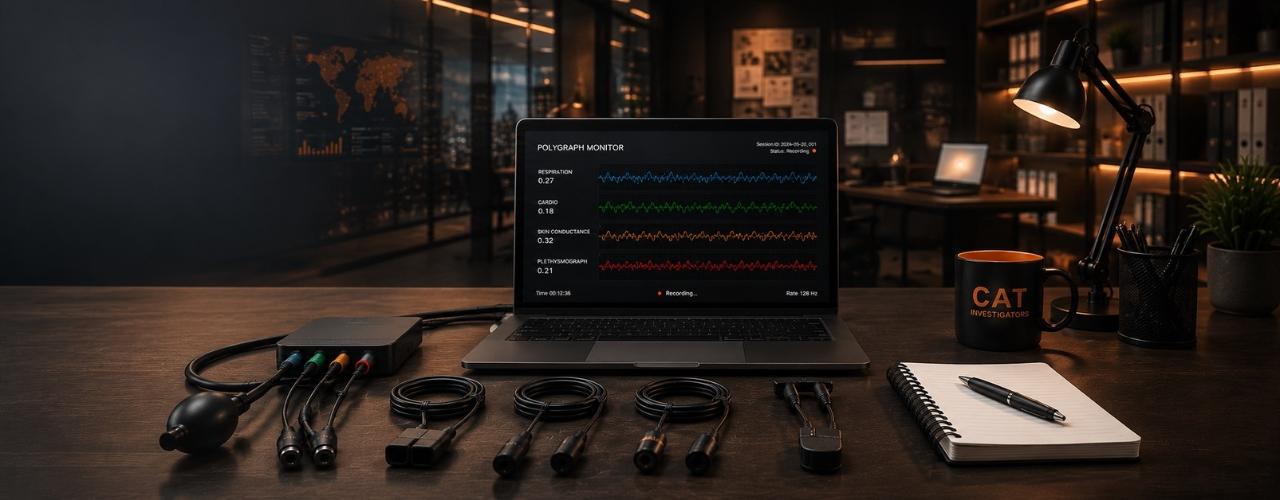
Specifically, it records changes in respiration, cardiovascular activity, and electrodermal response, more commonly known as sweat gland activity, across a structured series of questions. The machine captures the body’s physiological responses. A trained examiner then interprets what those responses mean in the context of the specific questions asked, the baseline established during the examination, and the totality of the session.
The distinction between measuring physiological response and detecting deception is not a technicality. It is the foundation for understanding both what a polygraph can reliably do and where its limitations actually lie. The technology is the starting point. The examiner and the methodology are what determine whether the output is useful.
This is also why the quality of the examiner is not a minor variable. It is one of the most significant factors in whether a polygraph examination produces intelligence that is worth acting on.
The Seven Biggest Myths, Addressed Directly
Myth 1: Polygraphs are infallible lie detectors.
The American Polygraph Association’s 2011 meta-analysis of 38 qualifying studies found that validated polygraph techniques produce an aggregated decision accuracy of 87%, with event-specific diagnostic techniques achieving 89%. The National Academy of Sciences found accuracy indexes ranging from 0.81 to 0.91, while noting these figures likely overstate true field accuracy.
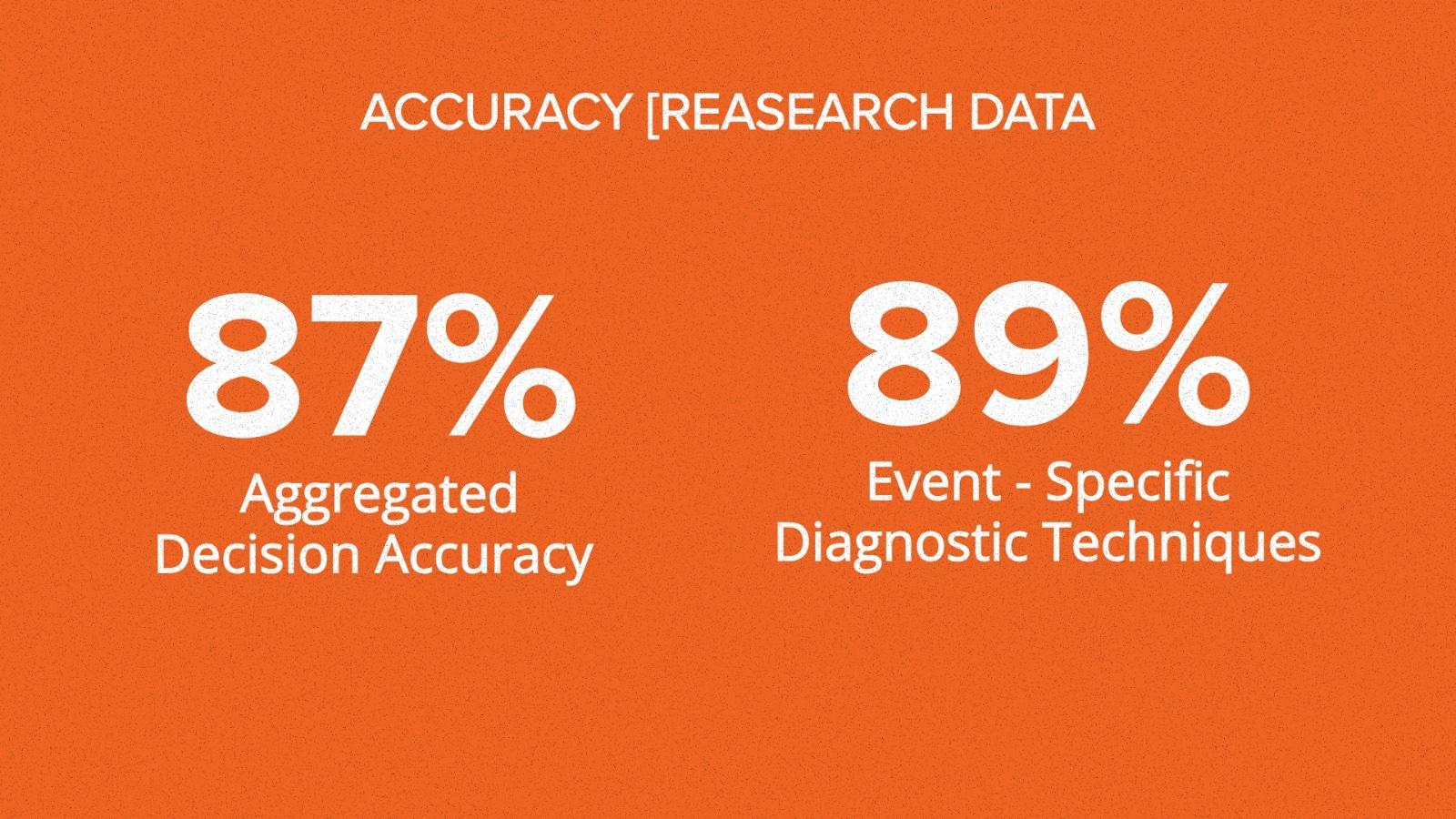
Those are meaningful accuracy rates. They are not perfect ones. False positives exist: truthful people who register deceptive responses. False negatives exist: deceptive people whose physiological responses do not trigger the relevant indicators. The polygraph is a powerful investigative tool. It is not an infallible one, and treating it as such leads to exactly the kind of misuse that brought it under legitimate scrutiny.
Myth 2: You can easily beat a polygraph.
This is the myth that receives the most confident endorsement from people who have never actually been tested. The countermeasures that circulate online, controlled breathing, biting the tongue, mental arithmetic, are largely ineffective against a trained examiner conducting a properly designed examination.
The consequences of attempting to teach them are not theoretical. In 2013, Operation Lie Busters resulted in federal indictments specifically for teaching polygraph countermeasures. Doug Williams was sentenced to two years in federal prison and Chad Dixon received eight months for their roles in coaching individuals on countermeasure techniques. The examiners who conduct these tests are trained to identify countermeasure attempts, and a detected attempt does not produce an inconclusive result. It produces findings that are actively damaging.
Myth 3: Polygraphs are never admissible in court.
This one is stated as an absolute fact in conversations that treat it as settled law. It is not settled. It is jurisdiction-specific, proceeding-specific, and in active legal evolution.
New Mexico is the only state that permits routine admission of polygraph results without a prior stipulation, under Rule 11-707. Polygraph testimony was admitted by stipulation in 19 states as of 2007, and this number has continued to evolve. The 2025 Nania v. State decision in Wyoming shows that courts are actively reconsidering blanket bans on polygraph admissibility. In federal courts, the Daubert standard applies, and admissibility is at the discretion of the trial judge based on whether the specific technique meets the standard of scientific reliability. Beyond trial proceedings, polygraph results are regularly used in plea negotiations, bond hearings, sentencing evaluations, and post-conviction supervision programs, contexts where the formal admissibility rules that apply at trial are not the relevant framework.
The blanket claim that polygraphs are never admissible is not just inaccurate. It causes attorneys and investigators to dismiss a tool that could be strategically valuable in the specific proceeding they are navigating.
Myth 4: Only guilty people fail polygraphs.
The test measures physiological response to stress. Anxiety, fear, a strong desire to be believed, previous trauma, and medical conditions can all produce responses that an examiner may score as deceptive in an innocent person. Conversely, individuals who are skilled at emotional regulation, who genuinely believe a distorted account of events, or who are practiced at the specific conditions of polygraph examination may produce responses that score as non-deceptive when they are not telling the truth.
This is not an argument against polygraph testing. It is an argument for understanding what it produces: probabilistic intelligence, not certainty. A finding of deception is a finding that warrants further investigation, not a verdict.
Myth 5: Polygraphs are only used in criminal cases.
Federal, state, and local government agencies may use polygraph testing for any employment purpose, including pre-employment screening, periodic security checks, and specific incident investigations. The FBI, DEA, Secret Service, CIA, NSA, and numerous other federal agencies routinely require polygraph examinations as part of the hiring process for agents, analysts, and support staff.
Beyond government, polygraph testing is used in internal corporate investigations involving theft, fraud, and misconduct, in HR disputes where conflicting accounts cannot be resolved through other means, in custody proceedings, and in high-value commercial negotiations where verifying specific representations is material to a transaction. The criminal context is the most publicly visible application. It is far from the only one.
Myth 6: The examiner does not matter.
It matters enormously. Question design is one of the most technically demanding aspects of a polygraph examination, and a poorly designed question set can render an examination useless regardless of how sophisticated the equipment is. The examiner’s training, certification, experience in the specific type of examination being conducted, and qualification to testify in court if required are all variables that directly affect the reliability and usability of the output.
There is no polygraph result. There is a polygraph result produced by a specific examiner using a specific technique under specific conditions. Treating those variables as interchangeable is how organizations end up with findings they cannot act on.
Myth 7: A passed polygraph proves innocence.
It does not. It provides a data point indicating that the examinee’s physiological responses to the relevant questions did not produce deceptive indicators under the conditions of the examination. What that means depends on the technique used, the examiner who conducted it, the specific questions asked, and the context in which the result is being evaluated. A passed polygraph is meaningful intelligence. It is not exoneration, and presenting it as such is both legally inaccurate and strategically counterproductive.
The Seven Biggest Myths, Addressed Directly
Understanding the myths clears the ground for understanding where polygraph testing genuinely delivers value.
Pre-employment screening for sensitive roles. Nearly every law enforcement agency in the United States requires pre-employment polygraph screening, and the government exemption under EPPA is absolute, covering federal, state, and local agencies with unrestricted authority to use polygraph testing in both pre-employment and ongoing employment contexts. For roles involving access to classified information, public funds, or sensitive operational environments, polygraph screening is not a supplementary tool. It is a baseline requirement.
Internal corporate investigations. When an organization faces allegations of internal theft, financial misconduct, or fraud and the formal evidentiary record does not resolve the question of who was involved, polygraph examination of relevant individuals provides investigative intelligence that can direct resources toward the right people and away from the wrong ones. It does not replace a full investigation. It focuses it.
Directing investigative resources. One of the most consistently underappreciated applications of polygraph testing is its role in determining where further investigation is warranted. A finding of deception does not end the investigation. It prioritizes it. Knowing which account warrants deeper scrutiny, and which can be set aside, is valuable in any investigation where multiple individuals have provided conflicting versions of events.
Legal proceedings. In jurisdictions where admission is available, whether by stipulation, under specific state rules, or through discretionary federal admission, polygraph results can support negotiation, challenge credibility, or provide evidence that influences outcomes at sentencing or in plea discussions. Even where formal admission is not available, the existence of a polygraph result is frequently material to how a proceeding develops.
The Admissibility Question, Answered Properly
The legal framework governing polygraph admissibility is more nuanced than the standard dismissal suggests, and it is in active evolution.
Two primary standards govern admissibility in the United States. The Frye standard, which requires that the technique be generally accepted within the relevant scientific community, was the dominant framework in federal courts until 1993, when the Supreme Court’s Daubert decision replaced it with a more flexible standard that evaluates scientific reliability based on a broader range of factors including peer review, error rate, and general acceptance.
Under Daubert, polygraph admissibility in federal court is at the discretion of the trial judge, who evaluates whether the specific technique meets the standard of scientific reliability on a case-by-case basis. No appellate court has ruled that polygraph evidence is always admissible, and no uniform rule applies across all federal circuits.
At the state level, the picture varies significantly by jurisdiction. New Mexico remains the only state permitting routine admission without stipulation. A significant number of states admit results by stipulation when both parties agree in advance.
For attorneys and investigators, the strategic implication is specific: before commissioning a polygraph examination for potential use in legal proceedings, the admissibility framework in the relevant jurisdiction, the technique being used, and the examiner’s qualification to testify need to be established in advance. Results obtained without that groundwork are not unusable, but they may be significantly less valuable than they could have been.
How to Commission a Polygraph Investigation Properly
The quality of a polygraph examination is determined before the examinee sits down. It is determined by the decisions made in designing and commissioning the engagement.
Question design is the most technically demanding component. Questions must be specific, unambiguous, and structured in a way that produces physiologically distinguishable responses between deceptive and non-deceptive answers. Poorly designed questions produce inconclusive results regardless of the examinee’s truthfulness. They also create vulnerability to challenge if the results are intended for use in legal proceedings.
Examiner selection is not a commodity decision. The examiner’s certification, their experience with the specific type of examination required, whether they are qualified to testify in the relevant jurisdiction, and their familiarity with the evidentiary requirements that will apply to the output are all factors that determine whether the engagement produces results that can be acted on.
The report from a properly conducted examination should document the technique used, the questions asked, the physiological data recorded, the examiner’s analysis and conclusions, and the methodology in sufficient detail to withstand scrutiny. A report that simply states a conclusion without documenting the basis for it is not useful in a legal context and is vulnerable to challenge in any formal proceeding.
The integration of polygraph findings into a broader investigative or legal strategy requires treating the results as intelligence rather than verdicts. They direct further inquiry. They support or challenge a narrative. They provide a basis for focused investigation. Used that way, by the right examiner, with the right methodology, they are a genuinely powerful investigative tool.
What a Polygraph Is and What It Is Not
A polygraph test is not a truth machine. The courtroom dramas that treat it as one, and the dismissals that treat it as useless, both miss what it actually is.
It is a structured, physiologically grounded investigative tool that, when used correctly by a qualified examiner, produces intelligence that changes the direction of an investigation and informs legal strategy in ways that other evidence types cannot. It has limitations, and understanding those limitations is what allows it to be used effectively.
The organizations and legal teams that understand this use polygraph testing as a precision instrument in the right circumstances. The ones that do not either over-rely on it or dismiss it entirely, both of which are mistakes that cost more than the test itself ever would.
FAQs
How accurate are polygraph tests?
The American Polygraph Association’s meta-analysis found that validated polygraph techniques produce an aggregated decision accuracy of 87%, with event-specific tests achieving 89%. The National Academy of Sciences found accuracy indexes of 0.81 to 0.91, while noting these likely overstate true field accuracy. The accuracy rate is meaningful and well-documented. It is not perfect, which is why polygraph results are best understood as probabilistic intelligence rather than definitive verdicts.
Are polygraph results admissible in court?
It depends on the jurisdiction and the proceeding. New Mexico permits routine admission without stipulation. A significant number of states admit results by stipulation. Federal courts apply the Daubert standard, leaving admissibility to the trial judge’s discretion based on the specific technique used. Beyond trial proceedings, polygraph results are regularly used in plea negotiations, bond hearings, and sentencing evaluations. The blanket claim that polygraphs are never admissible is legally inaccurate.
Can you beat a polygraph test?
Countermeasure techniques are largely ineffective against a properly conducted examination by a trained examiner. Examiners are specifically trained to identify countermeasure attempts. The federal prosecution of individuals who taught countermeasure techniques, including sentences of two years and eight months respectively, reflects how seriously the attempt to defeat these examinations is treated legally.
What does a polygraph test actually measure?
It measures physiological responses: changes in respiration, cardiovascular activity, and electrodermal response across a structured series of questions. It does not directly detect lies. It records the body’s physiological reactions, which a trained examiner then interprets in the context of the examination design, the baseline established, and the specific questions asked.
When is a polygraph test useful in an investigation?
Polygraph testing is most useful in pre-employment screening for sensitive government and law enforcement roles, internal corporate investigations where conflicting accounts cannot be resolved through other means, directing investigative resources toward the accounts that warrant deeper scrutiny, and legal proceedings where the jurisdiction’s admissibility framework allows the results to be used strategically.