
The Largest BSA Penalty Ever Imposed
On 3 August 2026, the U.S. Treasury’s Financial Crimes Enforcement Network (FinCEN) announced a $125 million civil money penalty against UBS Financial Services Inc. (UBSFS) for willful violations of the Bank Secrecy Act (BSA).
FinCEN described the action as the largest BSA penalty ever imposed on a broker‑dealer, and explicitly labeled UBSFS a recidivist institution that had ignored prior commitments to fix its AML controls.
The consent order covers failures between January 2019 and June 2023, but some control gaps in foreign‑currency wire monitoring trace back nearly two decades to at least 2004, surviving both internal audits and a 2018 FinCEN settlement.
During the relevant period, UBSFS failed to appropriately monitor more than 61,500 foreign‑currency wire transactions totaling approximately $10.5 billion, leaving those flows effectively invisible to its surveillance scenarios and depriving law enforcement of timely Suspicious Activity Reports (SARs).

UBS bank building in Frankfurt
FinCEN’s penalty sits within a coordinated, four‑regulator package. UBSFS has agreed to pay $20 million to FINRA, $20 million to the SEC, and $8 million to the CFTC for parallel findings tied to the same monitoring and customer due diligence failures, bringing the gross enforcement exposure across agencies to $173 million. Those three amounts – $48 million in total – are credited against the $125 million FinCEN penalty, leaving $62 million payable to the U.S. Treasury within ten days of the order’s effective date and a further $15 million due by 31 May 2028, subject to potential waiver if UBSFS completes mandated remediation and incurs qualifying independent‑consultant costs.
Separately, FINRA has issued its own enforcement action and press release, imposing a $20 million fine on UBSFS for failing to maintain an AML compliance program reasonably designed to detect and report suspicious foreign‑currency wire activity and for weak customer due diligence on certain retail clients.
FINRA’s order highlights repeat violations and explicitly links the failures to more than 60,000 transactions aggregating roughly $10 billion, reinforcing the scale of the unmonitored flows
Why This Case Matters
First, the consent order reveals that UBSFS’s “fix” for its 2018 monitoring problems was itself poorly governed. Rather than implementing a complete end‑of‑day data feed into the new surveillance system, the firm selected an incorrect partial feed that simply omitted a material percentage of foreign‑currency wires from monitoring. FinCEN notes a sample analysis in early 2022 where more than 5% of foreign‑currency wires were entirely excluded from the monitoring system and roughly 12% lacked critical counterparty information, meaning nearly one in five transactions had either no surveillance or severely degraded alert quality. Crucially, UBSFS had no exception queue or error‑handling process to catch these failures, so the system processed foreign‑currency wires for years without flagging missing data or unmonitored events.
Second, UBSFS’s risk appetite around clients with Russian and Latin American nexus was demonstrably misaligned with its public AML obligations. FinCEN’s statement of facts details relationships with multiple Russian oligarchs and politically exposed persons (PEPs), where wealth linked to controversial “loans‑for‑shares” privatisations, embezzlement allegations, and large gifts from high‑risk relatives was discounted as “speculation” or “not formal negative news” because no criminal charges had been filed. Similarly, UBSFS onboarded and maintained accounts for Latin American elites connected to corruption, tax fraud, and alleged laundering of hundreds of millions of Mexican pesos, while failing to properly investigate pass‑through activity, layering patterns, or the true purpose of wires that were later linked to political campaign financing and criminal networks.
Third, the SAR deficit is not theoretical. FinCEN identifies hundreds of suspicious transactions, involving tens of millions of dollars, that UBSFS failed to report in a timely and accurate manner. Those transactions include: late‑filed SARs on funds movements by Mexican officials and business figures under arrest or indictment for money laundering and tax fraud; multi‑year foreign‑currency flows linked to shell‑company‑driven equity syndicate schemes; and complex layering by high‑risk customers whose account activity exceeded stated net worth and income. Many of these SARs were only filed years later as part of remedial lookbacks, by which time originator or beneficiary information was missing, further reducing their investigative utility.
Structural Opacity: Data, Geographies, and Customer Risk
The narrative from FinCEN suggests that the breakdown at UBSFS was not a mere technical anomaly but rather a deep‑seated erosion of risk culture and data governance spanning various regions and financial products. For nearly ten years, the institution leaned on a manual, Excel‑dependent reporting process for foreign‑currency transfers within commodities accounts – a twelve‑step workflow across four disparate systems.
This fragile setup frequently required retroactive “clean‑up” efforts, leaving approximately half of the records during the audit period with deficient identifiers for accounts and households. Remarkably, an internal presentation from early 2019 – delivered after a prior FinCEN settlement – labeled the manual process ineffective, yet the firm maintained this flawed practice until the spring of 2021.
The transition to an automated framework did little to resolve these issues, as UBSFS neglected to establish a clear data lineage from its wire sources to its monitoring tools. This oversight resulted in vital fields, including beneficiary addresses and counterparty specifics, being either absent or incorrectly mapped.
A 2022 audit by an external consultant revealed that nearly one‑fifth of sampled outgoing wires lacked address data, even as these funds moved through high‑risk jurisdictions. This risk was exacerbated by UBSFS’s habit of assigning “moderate” risk scores to transactions with indeterminate beneficiary countries, ignoring the fact that such ambiguity in sensitive corridors should have mandated immediate escalation.
On the client level, UBSFS failed to apply its own tiered risk architecture effectively. While Higher‑risk profiles were theoretically subject to enhanced scrutiny, numerous Russian‑linked accounts remained categorized as “Low‑risk” despite clear shifts in residency, wealth origins, and professional ties to entities flagged for national security concerns.
A telling example involves a retired U.S. citizen whose income was linked to a sanctioned Russian oligarch; the firm onboarded him in 2021 as a low‑risk client, only revisiting the assessment after his 2022 indictment for sanctions evasion. Similarly, a professor based in Russia received over $2 million in wires from an eponymous Russian account over an eight‑year span without ever triggering a necessary risk profile revision.
Furthermore, the firm frequently prioritized client explanations over widespread negative media reporting.
For a prominent Russian oligarch, UBSFS brushed aside thousands of reports detailing his proximity to the Kremlin, controversial business dealings, and investments in Iranian crypto‑assets, labeling them as “speculative.” Despite official prohibitions on third‑party transfers for entities linked to this individual, the firm permitted more than 75% of outgoing volume from certain accounts to be routed to third parties. This included flows to a virtual asset service provider under the oligarch’s control, all conducted without the requisite due diligence on the recipient platform.
Follow‑On SAR Lookback and AML Program Review
The remedial framework established by FinCEN is strikingly granular, functioning more as a compulsory operational transformation than a standard punitive measure. UBSFS is required to retain, at its own cost, a pair of independent experts: a SAR Lookback Consultant and an AML Program Consultant.
The former is tasked with a retrospective audit of foreign‑currency wires and attempted transfers from January 2019 through June 2023. This mandate includes rigorous data‑lineage mapping and cross‑product testing to generate a comprehensive report flagging “Covered Transactions” that necessitate SAR filings under BSA protocols.
This retrospective analysis must be delivered within 180 days of the order becoming effective. Subsequently, UBSFS has a 90‑day window to file SARs on all identified transactions, with limited extensions granted only upon FinCEN’s discretion. While the firm may initiate filings during the ongoing review if prompted by the consultant, the primary obligation remains absolute: UBSFS must retroactively address years of reporting deficits while FinCEN maintains the authority to audit all draft reports, internal workpapers, and underlying methodologies.
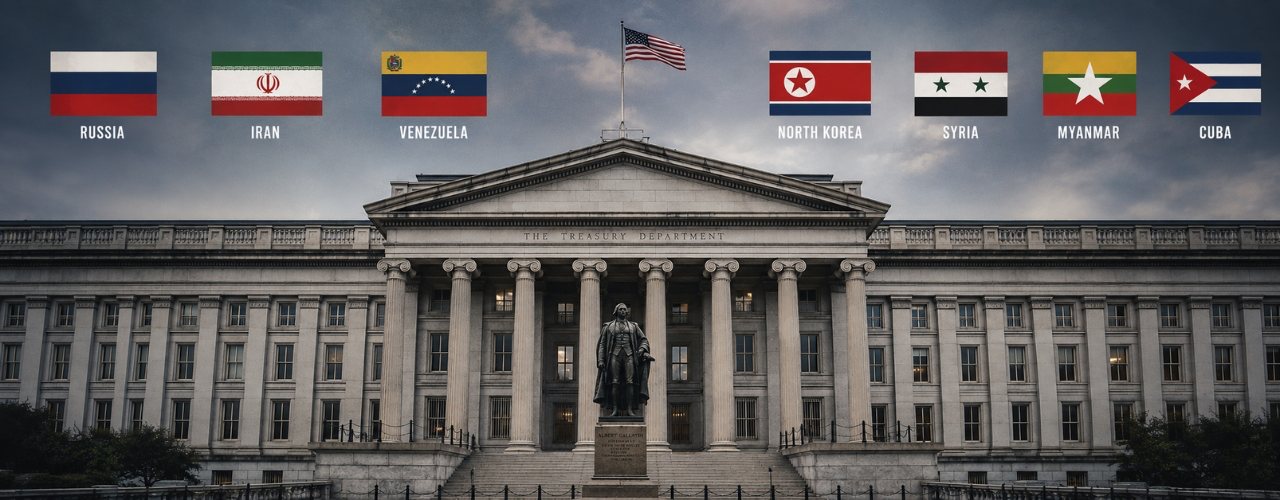
The AML Program Consultant’s objectives are significantly more expansive. Within the initial 90 days, a Scope Report must be submitted to FinCEN, outlining a testing regimen for high‑risk clients with a particular focus on four “Priority Illicit Finance Risks”: the U.S. Southwest border (cartels and narcotics), Iran, Venezuela, and Russia. This document must detail planned assessments of customer risk‑profiling, ongoing surveillance, data governance, and offboarding protocols.
Following this, the consultant has nine months to execute the full AML Program Review and provide FinCEN with a final assessment of the institution’s control environment. UBSFS is then required to formulate an Implementation Plan within 90 days to address any deficiencies. The process concludes with a verification report – due 180 days after plan finalisation – which must validate that enhanced monitoring and new restrictive controls have been effectively integrated into the firm’s customer relationships.
Completion of this multi‑stage sequence – audit, review, execution, and validation – is the sole path for UBSFS to seek a waiver for the remaining $15 million penalty via “Qualifying Expenses.” Critically, these credits only apply to incremental costs directly resulting from the mandate, rather than standard compliance overhead. FinCEN further safeguards the agreement by reserving the right to void releases and restart enforcement proceedings should UBSFS fail to comply or provide inaccurate progress reports.
Actionable Takeaways
The UBSFS enforcement action transcends the brokerage sector, serving as a definitive blueprint for how regulators address chronic AML deficiencies across the financial spectrum – including banking, digital asset platforms, and hybrid models.
- Prioritize Data Lineage as a Fundamental Control: The failure to map data flows from source to surveillance is a central pillar of FinCEN’s findings. Institutions must ensure comprehensive documentation of lineage for high – risk flows – including SWIFT messages and crypto on/off – ramps – while deploying real – time exception queues to catch malformed records. This includes harmonizing disparate operational labels (e.g., “FX RECEIVED” vs. “FX RCVD”) to prevent transactions from silently exiting the monitoring pipeline.
- Integrate KYC, Adverse Media, and Transactional Intelligence: UBSFS maintained obsolete risk ratings because its investigative silos failed to communicate. A robust compliance program requires dynamic, unified profiles where shifts in domicile, wealth origin, or public scrutiny automatically trigger re – ratings and enhanced monitoring, bolstered by crypto – native analytics and OSINT for sensitive geographies.
- Eliminate “Papered” Dispositions for UHNW Risk: FinCEN criticized the firm for generating reassuring narrative memos that lacked objective evidence regarding oligarch wealth and opaque offshore structures. Investigators must advise clients to ground risk decisions in structured scoring and independent multi – jurisdictional screening, rather than relying on internal relationship logic or affiliate assurances.
- Optimize SAR Protocols for High – Risk Corridors: Chronic reporting delays in Latin American and Russian contexts significantly erode the investigative utility of SARs. Firms must implement escalation playbooks where legal inquiries or major media exposés immediately trigger comprehensive historical reviews and expedited reporting decisions, supported by forensic wire and blockchain analysis.
- Prepare for Multi – Agency Scrutiny of Recidivism: The coordinated strike by FinCEN, the SEC, the CFTC, and FINRA signals a new era of regulatory alignment. For institutions with prior AML orders, remediation deadlines are no longer flexible; implementation slippage or a failure to disclose delays will likely result in second – round penalties that are far more punitive and intrusive than the first.